(469) 888-8241 | [email protected] | Same day appointments |In-person | Telehealth : 7 days a week, 9am-9pm | Free Consultation |Medicaid |accept most insurances

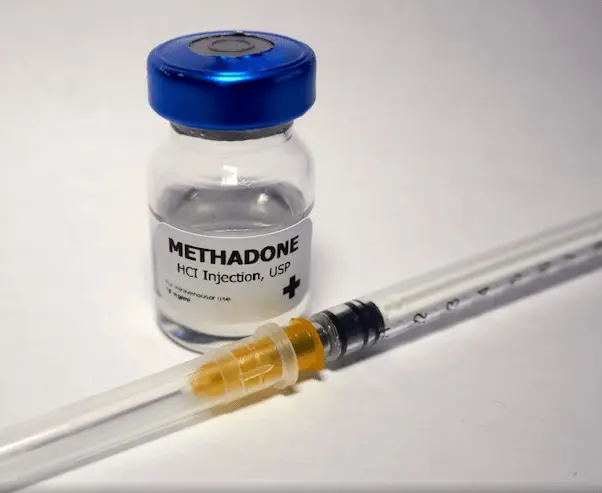
At Medivira,we help patients on Methadone who are stable & ready to switch to Suboxone
Switching from Methadone to Suboxone in Frisco, TX | Medivira
Board-certified Addiction Medicine care with same-day appointments, telehealth 7 days a week, 24/7 after hours text support and a free first consultation. Accept most insurances & Texas Medicaid
Can I Switch from Methadone to Suboxone?
Why So Many Patients Are Ready for a Change - Switching from Methadone to Suboxone is possible
For many patients it is a life-changing decision. With Methadone, patients must show up to a clinic, early, every morning. Many don't drive and depend on rides that aren't always reliable. Arrive late and the clinic won't dispense — leaving patients facing intolerable withdrawals
Suboxone changes all of that.It's prescribed as a take-home medication-patients no longer have to arrange transportation or take time off work to come to the clinic every day.For people who are working, raising families, or simply trying to rebuild their lives, that freedom isn't just convenient — it's often what makes recovery sustainable
Serving patients in Denton,Collin counties including Plano, Mckinney, Prosper, Celina, Allen
Are you ready for the switch from Methadone to Suboxone ?
Before recommending a switch to Suboxone, our Physician Dr. Saleha Jafar, MD- Board Certified in Addiction Medicine,conducts a careful, individualized evaluation that goes well beyond a simple medication change. She reviews your current Methadone dosage, your daily lifestyle and responsibilities, the side effects you are experiencing, any other medical conditions that may be influencing your treatment like heart,lung ,liver disease, pregnancy, Co-occurring mental health conditions prior History of overdose & your Motivation and readiness — patients who are stable and motivated to gain independence are strong candidates
Stigma and social barriers — managing Suboxone privately at home removes the daily exposure to community judgment that clinic visits can bring. If you are ready to explore whether switching is right for you, Dr. Jafar will walk through every one of these factors with you and help you to make a decision that is the right one for your health and your life
Important: Never stop Methadone or begin Suboxone on your own. Starting Suboxone too early after your last Methadone dose can trigger severe precipitated withdrawal. Always work with a medical provider.
Methadone vs. Suboxone: Key Differences
Both Methadone and Suboxone treat opioid use disorder (OUD) by reducing cravings and withdrawal symptoms — but they work differently and come with very different day-to-day lifestyles
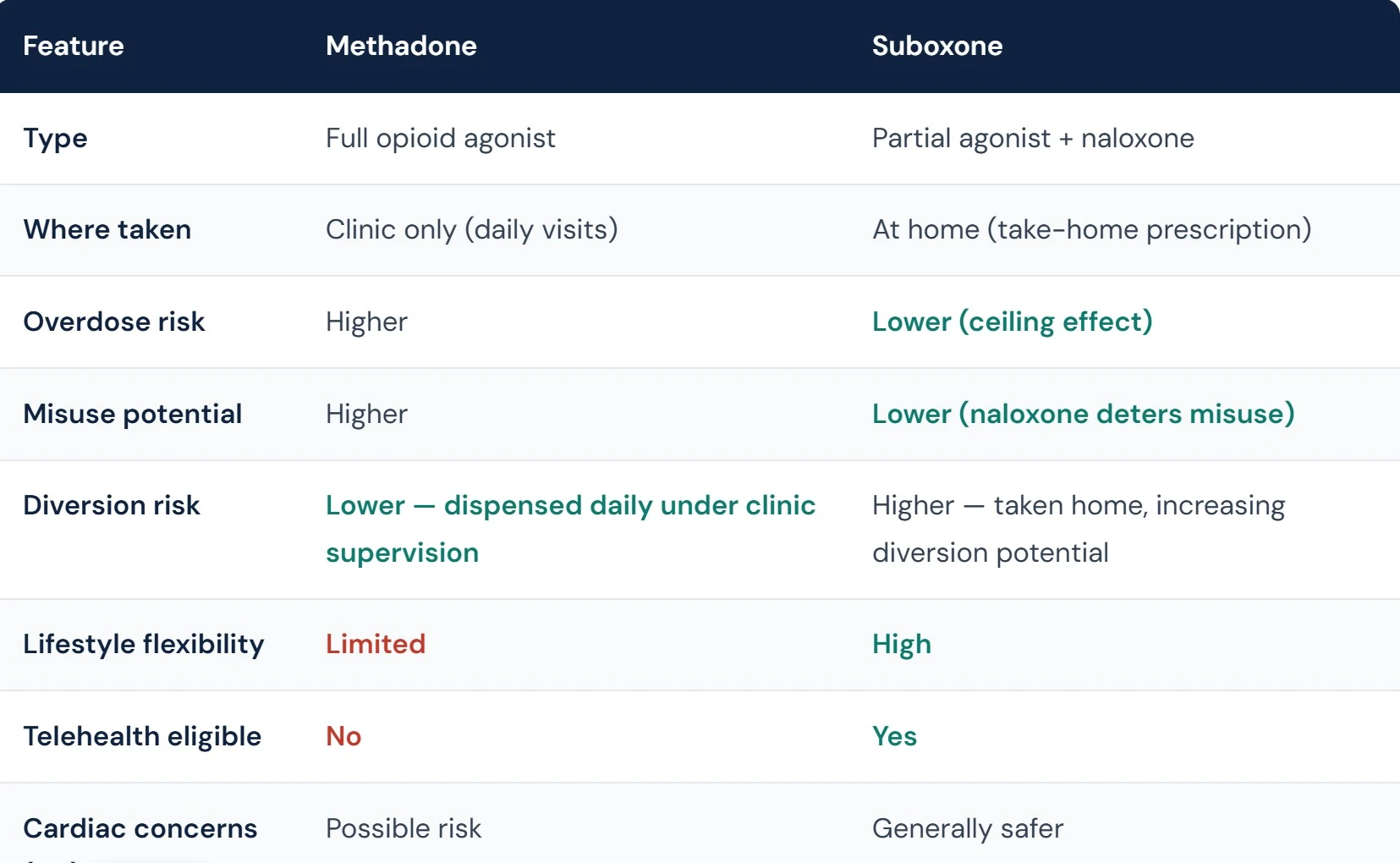
Why Patients in Frisco, TX Choose to Switch from Methadone to Suboxone?
Real Barriers That Make Methadone Unsustainable
Daily clinic visits are unsustainable — work, family, or travel make it impossible to attend a methadone clinic every single day
Transportation challenges — many patients don't drive and rely on rides that aren't always available or affordable
Zero tolerance for lateness — arriving late or missing a single day means missing your dose and facing withdrawals
Desire for more privacy — Suboxone can be filled at a regular pharmacy and taken discreetly at home
Side effect concerns — some patients experience heavy sedation, constipation, or cardiac concerns with Methadone
A path toward tapering — Suboxone's partial agonist profile can make eventual tapering more manageable
Telehealth access — Suboxone can be prescribed and monitored via televisit, available 7 days a week at Medivira
The Step-by-Step Transition Process at Medivira
Switching medications is a medically supervised process. Here is what it typically looks like at Medivira:
1) Free Consultation with our Physician: Reviews current Methadone dose, medical history, lifestyle, & recovery goals to determine if Suboxone is the right fit
2) Tapering Your Methadone Dose : ideally to 30 mg/day or less before beginning the switch. This process can take weeks to months depending on your current dose
3) The Waiting Period : typically 36 to 72 hours after last Methadone dose to prevent Precipitated withdrawals
4) Suboxone Induction: Under Physician supervision, in our Frisco Suboxone Clinic, you begin Suboxone. Dose monitor and adjusted as needed
5) Stabilization & Ongoing Support: Once your dose is established, you enter a maintenance phase.
Medivira provides regular follow-ups, 24/7 text message support, and televisits 7 days a week so you're never left without guidance.
What Is Precipitated Withdrawal — and How Do We Prevent It?
→ See our Suboxone FAQ page
Understanding the Biggest Risk in the Transition
Precipitated withdrawal is one of the biggest concerns when switching from Methadone to Suboxone. It happens when Suboxone is started too soon — its naloxone component rapidly displaces Methadone from opioid receptors before Methadone has fully cleared your system, triggering sudden, severe withdrawal symptoms including intense nausea, sweating, muscle cramps, and agitation.
How to prevent Precipitated withdrawals ?
This is entirely preventable with proper timing and medical oversight. Dr. Jafar gives every patient specific, personalized instructions on exactly when to take their first Suboxone dose — based on their actual withdrawal symptoms, not just a fixed clock time. This patient-by-patient approach is what makes the difference between a smooth transition and a dangerous one.
Is Suboxone the Right Choice for You?
Patients Who Tend to Do Well on Suboxone
Patients ready to manage medication independently at home
Those who need flexibility due to work, family, or travel obligations
Patients with mild to moderate OUD severity
Anyone seeking long-term tapering toward medication-free recovery
Patients with cardiac, respiratory, or other conditions that make Methadone higher risk
When Methadone May Still Be the Better Option
Patients who need a higher level of daily structure
have severe OUD
have not responded well to buprenorphine-based treatments in the past.
Our Addiction Medicine Specialist, Dr. Jafar will always give you an honest, clinical assessment — never a one-size-fits-all answer
FAQs-Switching from Methadone to Suboxone
What is the difference between methadone and Suboxone?
Methadone is a full opioid agonist used to treat opioid use disorder (OUD) by fully activating opioid receptors in the brain, reducing cravings and withdrawal symptoms. Suboxone (buprenorphine/naloxone) is a partial opioid agonist, meaning it activates those receptors only partially. Suboxone also contains naloxone, which helps prevent misuse. Both are FDA-approved medications for OUD, but they work differently and have different administration requirements.
Why would someone switch from methadone to Suboxone?
There are several reasons a person may choose to transition from methadone to Suboxone. Suboxone can be prescribed by a certified provider in an office setting, allowing patients to pick up prescriptions at a pharmacy rather than visiting a methadone clinic daily. It also carries a lower risk of overdose, has fewer drug interactions, and may offer more flexibility for people who travel or have demanding schedules.
Is it safe to switch from methadone to Suboxone?
Yes, when done under medical supervision, transitioning from methadone to Suboxone is considered safe. However, it requires careful planning because starting Suboxone too soon after the last methadone dose can trigger precipitated withdrawal — a sudden and intense onset of withdrawal symptoms. Your provider will guide you through a specific tapering and timing protocol to minimize this risk.
What is precipitated withdrawal, and why does it matter during this transition?
Precipitated withdrawal occurs when buprenorphine (the active ingredient in Suboxone) displaces methadone from opioid receptors before the methadone has cleared the system sufficiently. Because buprenorphine has a high affinity for opioid receptors but only partially activates them, it can rapidly push the person into withdrawal. Symptoms include sweating, chills, nausea, vomiting, muscle cramps, anxiety, and agitation. It can be severe and is the primary risk when switching from methadone to Suboxone
How long do I need to wait after my last methadone dose before starting Suboxone?
Most providers recommend waiting until the methadone dose is low — typically 30 mg per day or less — before initiating Suboxone. After the last methadone dose, patients generally need to wait at least 24 to 72 hours, and sometimes longer, before beginning Suboxone. Your provider will assess your COWS (Clinical Opiate Withdrawal Scale) score to determine when it is safe to start. The timing varies based on your methadone dose, how long you have been on it, and your individual metabolism.
Do I need to taper my methadone dose before switching to Suboxone?
Yes. Tapering your methadone dose is a critical step before transitioning to Suboxone. Most clinicians recommend reducing your methadone dose gradually to 30 mg per day or lower before making the switch. This reduces the risk of precipitated withdrawal and makes the transition smoother. Your methadone clinic and prescribing provider should work together to coordinate this taper safely.
Can I switch from methadone to Suboxone on my own?
No. Attempting to switch from methadone to Suboxone without medical supervision is dangerous and significantly increases the risk of precipitated withdrawal, relapse, or overdose. This transition must be managed by a licensed healthcare provider familiar with medication-assisted treatment (MAT). Always involve your treatment team before making any changes to your medication regimen.
What does the methadone-to-Suboxone transition process look like step by step?
The general process includes the following steps: First, your provider evaluates whether Suboxone is appropriate for you. Second, your methadone dose is gradually tapered to 30 mg per day or lower. Third, you stop taking methadone and wait the required period — usually 24 to 72 hours or more — until you are in mild-to-moderate withdrawal. Fourth, your provider confirms withdrawal using a COWS assessment. Fifth, your first dose of Suboxone is administered in a clinical setting and you are monitored for adverse reactions. Sixth, your Suboxone dose is adjusted over the following days to manage cravings and withdrawal comfortably.
What are the benefits of Suboxone compared to methadone for long-term treatment?
Suboxone offers several advantages for long-term treatment. It can be prescribed at a doctor's office and filled at a retail pharmacy, eliminating the need for daily clinic visits. It has a ceiling effect that reduces overdose risk. It is less likely to cause the sedation sometimes associated with methadone. It also has fewer interactions with heart medications and does not carry the same risk of QT prolongation (a heart rhythm concern) that methadone does in some patients.
Will I experience withdrawal symptoms when switching to Suboxone?
Some mild withdrawal symptoms are expected during the transition period, particularly in the hours before your first Suboxone dose when you are waiting for methadone to sufficiently leave your system. However, with proper medical guidance, these symptoms are manageable. Your provider may recommend comfort medications to ease the transition. If Suboxone is started at the right time, it should quickly relieve withdrawal symptoms rather than worsen them.
How long does the transition from methadone to Suboxone take?
The full transition process — from beginning the methadone taper to stabilizing on a comfortable Suboxone dose — can take several weeks to a few months depending on your current methadone dose, your overall health, and how quickly your dose can be safely reduced. Stabilization on Suboxone after the first dose typically takes a few days to two weeks.
Does insurance cover Suboxone after switching from methadone?
Most major insurance plans, including Medicaid and Medicare, cover Suboxone. Coverage details vary by state and plan, so it is important to verify your benefits before making the switch. Your treatment provider or a patient advocate can help you navigate insurance coverage and find assistance programs if needed.
Can I switch back to methadone if Suboxone does not work for me?
Yes. If Suboxone is not an effective treatment for you, it is possible to transition back to methadone under medical supervision. Every person's treatment needs are different, and the goal is to find the medication that best supports your long-term recovery. Open communication with your provider is key to making that determination
What areas and counties of Dallas do you serve?
Other conditions we treat at Medivira
Medivira provides addiction medicine and mental health services under the care of a licensed physician. This website is for informational purposes only and does not constitute medical advice.If you are experiencing a medical emergency, call 911
Timings: Same-day appointments
Telehealth:Mon to Sun : 7am–9pm
In-Person: Mon, Wed, Fri : 1pm–5pm
24/7 Text Support
Privacy Policy | Terms & conditions | Last updated: May 2026
© 2026 Medivira. All rights reserved.