(469) 888-8241 | [email protected] | Same day appointments |In-person | Telehealth : 7 days a week, 7am-9pm | Free Consultation |Medicaid |accept most insurances

Fentanyl Addiction Treatment Frisco, TX |Medivira
Medically Reviewed & Written By: Dr. Saleha Jafar, MD | Board-Certified: Addiction Medicine | Internal Medicine | Obesity Medicine | Last updated: May 2026
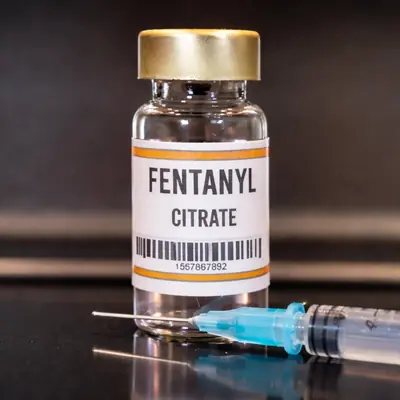
fentanyl citrate injection vial and syringe — the medical form of a synthetic opioid 50 to 100 times more potent than morphine, and the drug at the center of the opioid overdose crisis in Collin County, Texas.
Physician-Led compassionate, Same-day treatment with
Suboxone /Buprenorphine for Fentanyl Addiction at Medivira
Frisco clinic provides in person appointments to residents of Frisco, Plano, Mckinney, Allen,Prosper, Celina and
Tele visits throughout Texas 7 days a week, from 7:00 AM to 9:00 PM with 24/7 after hours support
We accept most major insurance plans, including Texas Medicaid, offer free initial consultations and same-day appointments
What Is Fentanyl?
Fentanyl is a synthetic opioid analgesic that is 50 to 100 times more potent than morphine. It was originally developed in 1960 and approved by the FDA for the management of severe pain, particularly in surgical settings and for patients with advanced cancer who have become tolerant to other opioids.
In its pharmaceutical form, fentanyl is legitimately prescribed as a transdermal patch, lozenge, or injectable solution. However, the illicitly manufactured version—often pressed into counterfeit pills or mixed with other drugs like heroin, cocaine, and methamphetamine—has become the primary driver of the opioid overdose crisis in the United States.
Because illicit fentanyl is unevenly distributed throughout a batch of drugs, a single pill or small amount can carry a lethal dose. The DEA has confirmed that six out of ten counterfeit pills seized in the U.S. now contain a potentially fatal amount of fentanyl.
Pharmaceutical Fentanyl
Used medically for severe pain, cancer pain management, and anesthesia under close physician supervision.
Illicitly Manufactured Fentanyl (IMF)
Produced in illegal labs and smuggled into the U.S. — the form responsible for the majority of overdose deaths.
How It Acts in the Body
Fentanyl binds to opioid receptors in the brain, causing intense euphoria, respiratory depression, and — in overdose — cessation of breathing.
Fentanyl Addiction (Opioid Use Disorder)
Fentanyl addiction — clinically diagnosed as Opioid Use Disorder (OUD) — is a chronic, relapsing brain disease, not a moral failing or lack of willpower. Because fentanyl is exponentially more potent than other opioids, physical dependence can develop rapidly — sometimes after only a few exposures. The brain's reward circuits are fundamentally altered, creating overwhelming cravings and compulsive drug-seeking behavior.
How Addiction Develops
When fentanyl enters the bloodstream it floods the brain's opioid receptors, releasing a surge of dopamine far beyond what any natural reward can produce. Over time, the brain adapts by reducing its own endorphin production and downregulating opioid receptors. Without fentanyl, a person feels profoundly dysphoric, anxious, and physically ill — which drives continued use not for pleasure, but to avoid suffering.
Recognizing the Signs of Fentanyl Addiction
According to the DSM-5 diagnostic criteria, a diagnosis of OUD requires the presence of at least two of the following within a twelve-month period:
Fentanyl in Collin County, Texas
The fentanyl crisis is not abstract — it is happening in our neighborhoods, schools, and workplaces across Collin County. The data below illustrates the severity of the epidemic in our community and across the Dallas–Fort Worth region.
Sources: Collin County Sheriff's Office via CBS DFW (2022); Recovery Resource Council Dallas County Needs Assessment (2023–2024); Texas DSHS / Texas Health and Human Services.
Collin County's rapid population growth and its proximity to major interstate drug trafficking corridors have made it especially vulnerable to the spread of illicitly manufactured fentanyl. Counterfeit pills — designed to look like legitimate prescription medications such as Xanax, Percocet, and Adderall — are widely available and carry an unpredictable, often lethal, fentanyl content.
Fentanyl Withdrawal: What to Expect
Fentanyl withdrawal is a medically significant process that should never be attempted alone or "cold turkey" without professional supervision. While rarely life-threatening on its own, the severity of symptoms frequently leads to relapse — and relapse after even a brief period of abstinence dramatically increases the risk of fatal overdose, because tolerance drops rapidly.
Timeline of Fentanyl Withdrawal
Hours 12–30 — Early Onset
Anxiety, restlessness, runny nose, yawning, sweating, and mild muscle aches begin as fentanyl levels fall in the bloodstream.
Hours 36–72 — Peak Symptoms
Nausea, vomiting, diarrhea, severe muscle cramps, insomnia, chills, goosebumps, rapid heart rate, and high blood pressure. This is the most intense and dangerous phase without medical support.
Days 5–10 — Acute Resolution
Physical symptoms diminish significantly. Fatigue, low mood, and mild cravings persist as the body begins to stabilize.
Weeks to Months — Post-Acute Withdrawal Syndrome (PAWS)
Mood swings, sleep disruption, cognitive fog, and intense cravings can continue well beyond acute withdrawal. This is why ongoing medication management and behavioral support are essential to long-term recovery.
Fentanyl Addiction Treatment at Medivira
Recovery from fentanyl addiction is achievable with the right clinical support. At Medivira, treatment is individualized, physician-led, and grounded in the best available medical evidence — including the treatment standards established by the American Society of Addiction Medicine (ASAM).
Clinical Foundation: The ASAM National Practice Guideline for the Treatment of Opioid Use Disorder identifies medication-assisted treatment (MAT) — specifically buprenorphine and methadone — as the evidence-based standard of care for opioid use disorder. ASAM defines addiction as "a treatable, chronic medical disease involving complex interactions among brain circuits, genetics, the environment, and an individual's life experiences."
American Society of Addiction Medicine (ASAM). National Practice Guideline for the Treatment of Opioid Use Disorder: 2020 Focused Update. Journal of Addiction Medicine, 14(2S Suppl 1):1–91. doi: 10.1097/ADM.0000000000000633. Available at: asam.org/quality-care/clinical-guidelinesMedications Used in Treatment
| Medication | How It Works | Administration |
|---|---|---|
| Buprenorphine / Suboxone | Partial opioid agonist — reduces cravings and withdrawal without producing a significant high; ceiling effect limits overdose risk. | Daily sublingual film or tablet; can be prescribed in an outpatient clinic. |
| Methadone | Full opioid agonist — eliminates withdrawal and cravings; tightly regulated due to overdose potential. Dispensed daily at a licensed opioid treatment program (OTP). | Not provided at Medivira. Patients who require methadone will be referred to an appropriate licensed OTP in the area. |
| Naltrexone (Vivitrol) | Opioid antagonist — blocks all opioid effects; suitable for patients who have completed detox and are committed to abstinence. Available as a monthly injectable or daily oral tablet. | Not provided at Medivira. Patients interested in naltrexone/Vivitrol will be referred to a provider who offers this treatment. |
Behavioral Therapy & Counseling
Research consistently shows that evidence-based behavioral therapy combined with Medication-Assisted Treatment (MAT) produces better long-term outcomes than either approach alone — including lower rates of relapse, overdose, and dropout from care. That said, behavioral therapy is not compulsory at Medivira. We respect each patient's autonomy and individual circumstances.
Medivira does not provide behavioral therapy or counseling services directly. However, if a patient would benefit from additional therapeutic support — whether for addiction, co-occurring mental health conditions, or both — we are happy to refer them to licensed therapists we trust. Our clinical team will work with each patient to identify the right fit when and if that need arises.
Levels of Care
Fentanyl addiction treatment is not one-size-fits-all. Using the ASAM Criteria, our clinical team assesses each patient across six dimensions — including withdrawal potential, medical and psychiatric co-morbidities, and recovery environment — to place every patient in the most clinically appropriate level of care, ranging from medically managed withdrawal to outpatient maintenance therapy.
Recognizing Fentanyl Overdose & the Role of Naloxone
A fentanyl overdose can occur within seconds of exposure and can be fatal without immediate intervention. Because illicit fentanyl is often mixed with other substances without the user's knowledge, overdose can happen to individuals who do not consider themselves addicted.
Signs of Fentanyl Overdose
Naloxone (Narcan) — The Overdose Reversal Medication
Naloxone is a fast-acting opioid antagonist that reverses fentanyl overdose by displacing fentanyl from opioid receptors in the brain, restoring normal breathing within minutes. It is available without a prescription in Texas at many pharmacies and community organizations. Because fentanyl is so potent, multiple doses of naloxone may be required to reverse a fentanyl overdose. Always call 911 immediately, even after administering naloxone.
Your Questions, Answered
Is fentanyl addiction treatable?
Yes. Fentanyl addiction is a medical condition that responds well to evidence-based treatment. Medication-assisted treatment (MAT) using buprenorphine (Suboxone) or methadone is the gold-standard approach supported by the American Society of Addiction Medicine (ASAM). Combined with behavioral therapy and ongoing support, most patients can achieve and maintain long-term recovery.
It is important to understand that addiction is a chronic disease — like diabetes or hypertension. Recovery often requires long-term management, and relapse is part of the disease process, not a sign of failure.
How long does fentanyl withdrawal last?
Acute fentanyl withdrawal typically begins within 12–30 hours of the last dose and peaks around 36–72 hours. Physical symptoms generally subside within 5–10 days. However, protracted withdrawal — including cravings, anxiety, mood instability, and sleep disturbances — can persist for weeks to months, which is why medically supervised treatment and ongoing medication management are strongly recommended.
What medications are used to treat fentanyl addiction?
The FDA-approved medications for opioid use disorder (OUD), which includes fentanyl addiction, are buprenorphine (often combined with naloxone as Suboxone), methadone, and naltrexone (Vivitrol). Buprenorphine is the most commonly prescribed in outpatient settings because it reduces cravings and withdrawal symptoms while carrying a lower overdose risk than methadone.
The right medication depends on the patient's history, severity of use, co-occurring health conditions, and personal preferences — a decision made in partnership with a physician trained in addiction medicine.
What is the difference between fentanyl dependence and fentanyl addiction?
Dependence is a physiological state in which the body has adapted to the presence of fentanyl, producing withdrawal symptoms when the drug is stopped or reduced. It can occur in any patient taking opioids regularly, even under medical supervision.
Addiction — clinically termed opioid use disorder — involves compulsive drug-seeking behavior and continued use despite harmful consequences. A person can be physically dependent without meeting the criteria for addiction. Both conditions benefit from medical evaluation and care.
Does insurance cover fentanyl addiction treatment?
Under the Mental Health Parity and Addiction Equity Act (MHPAEA) and the Affordable Care Act (ACA), most insurance plans — including Medicaid and Medicare — are required to cover substance use disorder treatment, including medication-assisted treatment for opioid use disorder, at a level comparable to medical and surgical benefits. Medivira's team can assist with benefits verification and insurance coordination during intake.
Can I get fentanyl treatment in Collin County, Texas?
Yes. Medivira provides comprehensive, physician-led fentanyl and opioid use disorder treatment in Collin County, Texas. Our services include medically managed withdrawal, medication-assisted treatment (MAT) with buprenorphine/Suboxone, individual and group counseling, and long-term recovery support — all tailored to each patient's unique clinical needs.
How long does it take to get addicted to fentanyl?
Physical dependence on fentanyl can develop within days of regular use due to its extraordinary potency — far faster than with other opioids. Clinically significant opioid use disorder can emerge within weeks of consistent exposure, particularly with illicitly manufactured fentanyl, where dosing is unpredictable and uncontrolled. Individual factors such as genetic predisposition, mental health history, and the route of administration all influence how quickly addiction develops.
Is it safe to stop fentanyl abruptly?
Stopping fentanyl abruptly — sometimes called "going cold turkey" — is rarely medically recommended and carries significant risks. While fentanyl withdrawal is seldom directly fatal, the severity of symptoms (vomiting, diarrhea, severe muscle pain, uncontrollable anxiety) is a leading cause of relapse. More critically, tolerance drops rapidly during withdrawal, and returning to a prior dose after even a few days of abstinence is a leading cause of fatal overdose. Medically supervised tapering or medication-assisted treatment is the safest and most effective path to stopping fentanyl use.
What is the success rate for fentanyl addiction treatment?
Framing addiction treatment solely in terms of a "success rate" can be misleading, because addiction is a chronic, relapsing condition — similar to type 2 diabetes or hypertension. Research consistently shows that patients engaged in medication-assisted treatment with buprenorphine or methadone have significantly lower rates of overdose death, illicit drug use, and criminal activity compared to those receiving no treatment or non-medication-based programs. Long-term outcomes improve substantially with sustained medication management, integrated behavioral therapy, and ongoing recovery support. The goal is sustained engagement in care, not a single moment of abstinence.
Other conditions we treat at Medivira
Medivira provides addiction medicine and mental health services under the care of a licensed physician. This website is for informational purposes only and does not constitute medical advice.If you are experiencing a medical emergency, call 911
Timings: Same-day appointments
Telehealth:Mon to Sun : 7am–9pm
In-Person: Mon, Wed, Fri : 1pm–5pm
24/7 Text Support
Privacy Policy | Terms & conditions | Last updated: May 2026
© 2026 Medivira. All rights reserved.