(469) 888-8241 | [email protected] | Same day appointments |In-person | Telehealth : 7 days a week, 9am-9pm | Free Consultation |Medicaid |accept most insurances

Postpartum depression (PPD) Treatment in Frisco,TX

new mother with postpartum depression symptoms — Frisco, TX.
You survived pregnancy. You survived labor.
But now, weeks later the sadness won't lift. And no matter how hard you try, you can't feel like yourself. Postpartum Depression (PPD) is real, it is common, and most importantly, it is treatable. Dr. Saleha Jafar, MD at Medivira in Frisco, TX provides compassionate, expert care to help you heal, reconnect with your baby, and reclaim your life. Both in-person and Telehealth appointments available
What is PostPartum Depression ?
Postpartum Depression (PPD) is a clinically recognized mood disorder affecting up to 1 in 5 new mothers, caused by dramatic hormonal shifts, sleep deprivation, and the psychological demands of new parenthood. It is not a personal failure — it is a medical condition that responds well to treatment.
Postpartum Depression in the U.S.
Postpartum Depression Is a Medical Condition — Not a Personal Failure
PPD is one of the most common complications of childbirth, yet it remains widely misunderstood and underreported. Many new mothers suffer in silence, believing they should simply feel grateful — or fearing judgment if they admit they are struggling.
PPD is not a sign of weakness, a character flaw, or proof that someone is a bad mother. It is driven by dramatic hormonal shifts, sleep deprivation, physical recovery, and the profound psychological adjustment of becoming a parent. Whether you are searching for new mom depression help, postpartum anxiety treatment, or comprehensive perinatal mental health Frisco care, Medivira is here to help.
At Medivira in Frisco, Texas, Dr. Jafar provides expert, judgment-free care for Postpartum Depression — helping mothers recover, reconnect with their babies, and reclaim their sense of self.
Causes & Risk Factors for Postpartum Depression
Hormonal Changes
During pregnancy, estrogen and progesterone levels are dramatically elevated. After delivery, these hormones plummet sharply — a biological shift that significantly affects mood, sleep, and emotional regulation, sometimes triggering a depressive episode.
Sleep Deprivation & Physical Recovery
Chronic sleep loss alone can precipitate mood disorders. For new mothers recovering from labor and delivery while caring for a newborn, this exhaustion compounds every other biological vulnerability.
Thyroid Changes
Postpartum thyroiditis affects up to 10% of women and can cause significant depressive symptoms. Dr. Jafar evaluates thyroid function as part of a comprehensive assessment when indicated.
Personal & Family History
A personal history of depression, anxiety, a previous episode of PPD, or a family history of mood disorders significantly increases risk. Women with a history of PMDD are also at higher risk.
Psychosocial Stressors
Relationship conflict, financial stress, lack of support, pregnancy complications, a difficult birth experience, or prior trauma all contribute to elevated PPD risk.
High-Risk or Unplanned Pregnancy
Women who experienced significant anxiety during pregnancy, had complications, or underwent fertility treatments are at greater risk. The emotional weight of a difficult prenatal period often carries into the postpartum phase.
What Are the Symptoms of Postpartum Depression?
Postpartum Depression can emerge anytime within the first year after childbirth — not just the first few weeks. Symptoms vary in intensity and may look different from person to person.
Persistent Sadness or Emptiness
Feeling deeply sad, hopeless, or emotionally numb for most of the day — not just occasional tearfulness, but a pervasive low mood that does not lift.
Severe Anxiety & Panic
Intense worry, racing thoughts, and physical anxiety symptoms such as chest tightness, shortness of breath, and a constant sense of dread about the baby's health.
Difficulty Bonding with Baby
Feeling emotionally disconnected from the newborn, going through the motions of caregiving without feeling love or attachment, or feeling like a stranger to your own baby.
Intrusive Thoughts
Unwanted, distressing thoughts — sometimes about harm coming to the baby or to oneself. These are a recognized PPD symptom, not a sign of intent, and are treatable.
Extreme Fatigue & Withdrawal
Exhaustion beyond normal new-parent tiredness, loss of interest in activities, withdrawing from family and friends, and difficulty completing everyday tasks.
Feelings of Worthlessness or Guilt
Believing you are a bad mother or fundamentally broken. In severe cases, thoughts of self-harm or suicide may be present and require immediate care. If you are in crisis, call 988 (Suicide & Crisis Lifeline).
How Is Postpartum Depression Diagnosed?
There is no single test for Postpartum Depression. Diagnosis is based on a thorough clinical evaluation that distinguishes PPD from baby blues, postpartum anxiety, postpartum OCD, and — in rare cases — postpartum psychosis.
The Evaluation Process at Medivira
- Comprehensive symptom history — onset, duration, and severity
- Validated screening tools such as the Edinburgh Postnatal Depression Scale (EPDS)
- Review of personal and family psychiatric history
- Assessment for co-occurring anxiety, OCD symptoms, or psychosis
- Evaluation of thyroid function and other medical contributors if indicated
- Discussion of breastfeeding status to guide safe treatment choices
Beyond PPD — The Full Spectrum of Perinatal Mood Disorders
Baby Blues
Mild, self-resolving; typically clears within two weeks
Postpartum Depression
Moderate to severe; requires professional treatment
Postpartum Anxiety
Intense worry and fear; often co-occurs with PPD
Postpartum OCD
Intrusive thoughts with compulsive behaviors
Postpartum PTSD
Following traumatic birth experiences
Postpartum Psychosis
Rare but a medical emergency — requires urgent care immediately
Postpartum Depression Treatment at Medivira
Dr. Jafar tailors treatment to each patient's symptom severity, personal preferences, breastfeeding status, and any co-occurring conditions — using the most effective evidence-based tools available. Patients across Texas access zuranolone / Zurzuvae treatment Texas and other cutting-edge therapies through Medivira's in-person and telehealth services.
Psychotherapy
Therapy is highly effective for PPD, particularly for mild-to-moderate cases. Can be delivered via telehealth for maximum convenience.
- CBT — Addresses negative thought patterns and builds coping strategies
- IPT — Focuses on relationship changes and role transitions of new parenthood
- Supportive Counseling — Compassionate space to process new parenthood
Medication Options
Medication is important for moderate-to-severe PPD. Dr. Jafar selects medications carefully based on breastfeeding status and prior treatment history.
- SSRIs — Sertraline, paroxetine, escitalopram; compatible with breastfeeding
- SNRIs — An option when anxiety is a prominent feature
- Zuranolone (Zurzuvae) — First oral FDA-approved medication for PPD; rapid onset
- Brexanolone (Zulresso) — IV; FDA-approved for severe PPD cases
Whole-Person Care
Dr. Jafar also provides guidance on sleep strategies, nutrition, social support, and lifestyle factors that support recovery — recognizing that no single intervention exists in isolation.
- Sleep optimization strategies for new mothers
- Nutritional guidance and supplement support
- Social support network building
- Ongoing follow-up and treatment adjustments
Expert Care for Mothers & Families
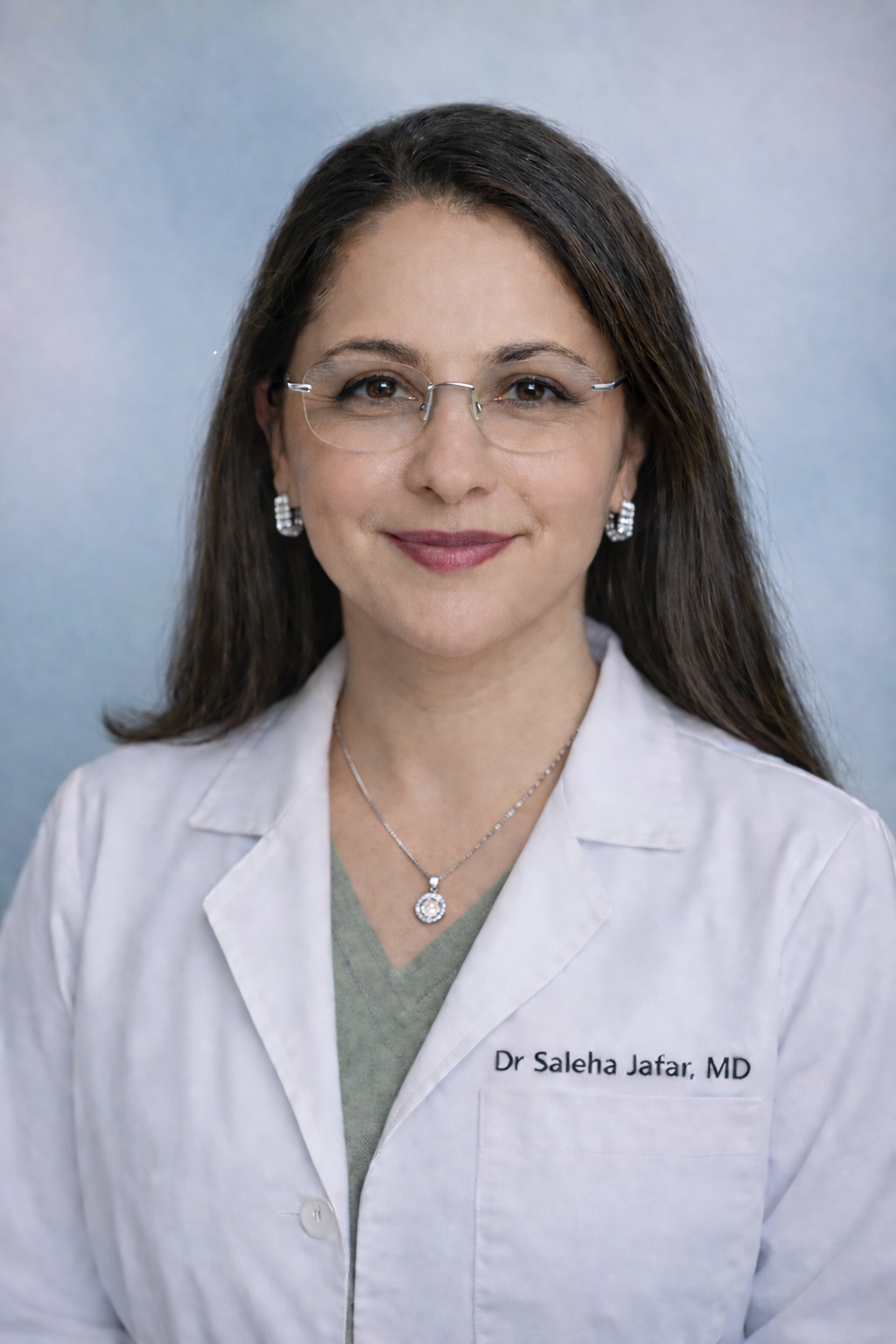
Dr. Saleha Jafar, MD
Postpartum Depression Physician
Medivira · Frisco, TX
Dr. Saleha Jafar, MD
Board-Certified Physician — Internal Medicine, Addiction Medicine & Obesity Medicine
Medivira · Frisco, Texas
Dr. Saleha Jafar, MD is a board-certified physician with over 30 years of clinical experience, practicing in Frisco, Texas. She earned her medical degree from Osmania Medical College, Hyderabad, India (1995) and completed her residency and internship at the University of Pittsburgh Medical Center. She is affiliated with Medical City Frisco, Baylor Scott and White Medical Center Centennial, and Texas Health Frisco.
At Medivira, Dr. Jafar treats the full spectrum of perinatal mood disorders — including postpartum depression, postpartum anxiety, postpartum OCD, and PTSD — as well as co-occurring conditions that frequently complicate the postpartum period. Her approach is individualized, evidence-based, and grounded in compassion. She speaks English, Hindi, Spanish, Telugu, and Urdu.
Related Conditions We Also Treat
In-Person & Telehealth Appointments
If you've been searching for a PPD doctor near me in the Frisco, Plano, McKinney, or Allen area, Medivira offers flexible appointment options designed to fit the reality of new parenthood — whether you come to our Frisco office or connect from home with your baby nearby via telehealth.
In-Person Visits
Visit our Frisco, Texas office for a comprehensive in-person evaluation. In-person visits allow for a thorough clinical assessment and face-to-face connection with Dr. Jafar — valuable for initial evaluations and more complex presentations.
Telehealth Visits
Receive expert care from the comfort and privacy of your own home — no need to arrange childcare or travel. Telehealth is available for patients throughout Texas and is ideal for initial consultations, medication management, postpartum anxiety treatment, and ongoing care.
Frequently Asked Questions About Postpartum Depression
Does Medivira treat Postpartum Depression in Frisco, TX?
Yes. Medivira provides comprehensive evaluation and treatment for Postpartum Depression in Frisco, Texas. Both in-person and telehealth appointments are available for new mothers and parents throughout Texas. As a trusted PPD doctor near me for patients across the DFW area, Dr. Jafar offers same-week appointments when available.
What is the difference between baby blues and Postpartum Depression?
Baby blues are mild mood swings, tearfulness, and irritability that begin a few days after delivery and typically resolve on their own within two weeks. Postpartum Depression is more severe, longer lasting, and significantly impairs daily functioning and the ability to care for yourself and your baby. PPD does not resolve on its own and requires professional treatment. If your symptoms have lasted longer than two weeks or are interfering with your life, it is important to seek an evaluation from a qualified provider offering perinatal mental health Frisco care.
Is Postpartum Depression a sign I am a bad mother?
Absolutely not. Postpartum Depression is a medical condition — not a reflection of your love for your baby, your fitness as a parent, or your character. It is caused by a complex combination of hormonal, biological, and psychological factors entirely outside your control. Seeking new mom depression help is an act of courage and love. At Medivira, you will be met with compassion, not judgment.
What medications are used for Postpartum Depression?
SSRIs such as sertraline and paroxetine are well-established, effective treatments for PPD and have a strong safety record for breastfeeding mothers. The FDA has also approved two medications specifically for PPD: zuranolone (Zurzuvae) treatment Texas patients can now access through Medivira — an oral medication with rapid onset — and brexanolone (Zulresso), an IV infusion for severe cases. Dr. Jafar will carefully evaluate your situation — including breastfeeding status and symptom severity — before recommending any medication.
Can I take antidepressants while breastfeeding?
Yes — several medications commonly used for PPD are considered compatible with breastfeeding. Sertraline, in particular, has one of the strongest safety records among breastfeeding mothers, with minimal transfer into breast milk. Dr. Jafar will review the available evidence and help you make a fully informed decision that weighs your wellbeing and your baby's safety.
How long does Postpartum Depression last?
Without treatment, Postpartum Depression can persist for many months or even years. It does not typically resolve on its own. With appropriate treatment — therapy, medication, or a combination — most women experience meaningful improvement within weeks to a few months. Early treatment leads to faster recovery and better outcomes for both mother and child.
Can fathers or non-birthing partners get Postpartum Depression?
Yes. Paternal Postpartum Depression affects an estimated 10% of new fathers and is a recognized clinical condition. Non-birthing partners can also experience significant depressive and anxiety symptoms during the perinatal period. Medivira welcomes all parents — regardless of gender or birthing role — who are experiencing postpartum mood difficulties.
Does Medivira offer telehealth for Postpartum Depression treatment?
Yes. Medivira offers telehealth appointments for patients throughout Texas — a particularly convenient option for new parents who may find it difficult to leave home with a newborn. Telehealth visits are available for initial evaluations, medication management, follow-up care, and ongoing treatment. The quality of care is exactly the same as an in-person visit. We also provide postpartum anxiety treatment and a full range of perinatal mood disorder care via telehealth.
Sources & References
- American College of Obstetricians and Gynecologists (ACOG). Clinical Practice Guideline No. 4: Screening and Diagnosis of Mental Health Conditions During Pregnancy and Postpartum. Obstet Gynecol. 2023. acog.org
- U.S. Food & Drug Administration. FDA Approves First Oral Treatment for Postpartum Depression. 2023. fda.gov
- American Psychiatric Association. Diagnostic and Statistical Manual of Mental Disorders, 5th ed. (DSM-5). Major Depressive Disorder with Peripartum Onset.
- National Institute of Mental Health (NIMH). Postpartum Depression. nimh.nih.gov
- Wisner KL, et al. Onset timing, thoughts of self-harm, and diagnoses in postpartum women with screen-positive depression findings. JAMA Psychiatry. 2013;70(5):490–498.
Other conditions we treat at Medivira
Medivira provides addiction medicine and mental health services under the care of a licensed physician. This website is for informational purposes only and does not constitute medical advice.If you are experiencing a medical emergency, call 911
Timings: Same-day appointments
Telehealth:Mon to Sun : 7am–9pm
In-Person: Mon, Wed, Fri : 1pm–5pm
24/7 Text Support
Privacy Policy | Terms & conditions | Last updated: May 2026
© 2026 Medivira. All rights reserved.