(469) 888-8241 | [email protected] | Same day appointments |In-person | Telehealth : 7 days a week, 9am-9pm | Free Consultation |Medicaid |accept most insurances

Kratom Addiction Treatment in Frisco,TX | Same-day| Medivira
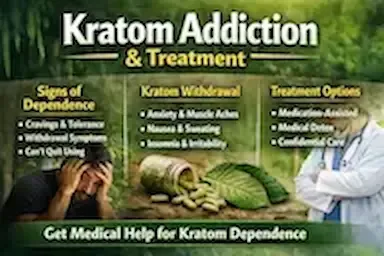
Medivira in Frisco,TX offers medication management for Kratom addiction
Kratom is often marketed as a natural supplement, but regular use can lead to dependence. Many people feel embarrassed discussing kratom use. At Medivira, we provide Physician-led confidential, compassionate, and judgment-free treatment for Kratom dependence and withdrawals
Patients from Frisco, Plano, McKinney, The Colony, Prosper, and North Dallas seek discreet help from us - in person at our Frisco clinic or through Same day Telehealth appointments available 7 days, 9am to 9pm with 24/7 text support
Most insurances & Texas Medicaid accepted First Free consultation
Why patients in Texas choose Medivira for Treatment of Kratom Addiction?
just minutes from Stonebriar Centre & The Star in Frisco
Discreet, private care in a professional medical setting
Telehealth-with minimal waiting room time
Seamless transfer for patients already in treatment & want to transfer from previous provider to Medivira
Personalized treatment plans, not a high-volume clinic
Board certified doctors with years of experience, focused on long-term recovery and mental wellness
long acting injectable, Sublocade® MAT available for treatment of Opioid use disorder
Don't have insurance? $125/visit —one of the cheapest in the DFW area. no memberships, no hidden fees
Kratom Withdrawal Timeline.What to Expect Day by Day ?
Symptoms generally follow a predictable timeline after the last dose
Phase 1 6–12 hrs Early onset:anxiety,irritability, drug cravings, yawning, runny nose, sweating
Phase 2 12–48 hrs Peak intensity: muscle aches, insomnia, nausea, vomiting,restless legs,hot/cold flashes
Phase 3 Days 3–5 Improvement in physical symptoms. psychological symptoms (depression, anxiety) may peak
Phase 4 Weeks 1–4+ Post-acutewithdrawal: mood disturbances, low energy, and cravings may persist for weeks
Kratom withdrawal is rarely life-threatening but can be intensely uncomfortable
What is Kratom? What is Kratom Use disorder (KUD)?
Kratom is an herbal supplement grown in Southeast Asia. It is unregulated and commonly sold in gas stations and online as an anti-depressant, energy booster and pain reliever. Kratom has also been used to reduce symptoms of opioid withdrawal. Users consume kratom by ingesting it through tablet, capsule or extract; smoking its leaves; making a tea with the leaves, or chewing the leaves.
KUD includes increased use, tolerance, withdrawal, unsuccessful quit attempts, and craving.
There may be decreases in important social, occupational, or recreational activities because of consistent use
When should I see a doctor if I think I have Kratom Addiction?
You should consider seeing a doctor if your kratom use is becoming difficult to control or causing problems in your daily life. While some people initially take kratom for pain, anxiety, or energy, regular use can lead to dependence and withdrawal symptoms
When to Seek Professional Advice: It may be time to seek medical help if you notice:
You feel sick, anxious, or irritable when you stop taking kratom
You need larger amounts of kratom to get the same effect
You have tried to quit but cannot stop
You take kratom just to feel normal
Kratom use is affecting your health, sleep, work, or relationships
Co-occurring Mental Conditions: You may have anxiety, depression, or other conditions that might be linked to untreated KUD; these might get better when your KUD is treated
What should I expect on my first visit?
First Appointment / Intake
After assessment of your opioid use a personalized treatment plan is created & a Suboxone prescription is sent to a pharmacy of your choice. Suboxone induction is usually done in our clinic but can be done in your home based on your clinical condition. Visit time is 30 minutes to 2 hours
Second Visit
Stabilization (2–4 weeks later) : Doctor monitors your treatment progress, adjusts your dosage as needed, and ensures you are stabilizing comfortably on your medication. This visit is available via telehealth, no travel required. You can take this appointment from home, your office, or anywhere in Texas.Visit time is 20 minutes
Maintenance Visits
After the first 1-2 times you can do Tele visits once every month. Your doctor will monitor your progress, give feedback, address any medication side effects or adjust medication dosages.You will always see the same doctor — someone who knows your name, your history, and your goals
What are the Symptoms of Kratom Addiction ?
Kratom use disorder manifests across behavioral, physical, and psychological domains. Recognizing these signs is critical to seeking timely help.
Behavioral Signs
Spending excessive time obtaining, using, or recovering from kratom
Continuing use despite relationship, work, or health problems
Giving up hobbies or activities previously enjoyed
Using larger amounts or for longer than intended
Failed attempts to cut down or stop
Craving or strong urge to use kratom
Concealing use from family or healthcare providers
Physical & Psychological Signs
Tolerance — needing more to feel the same effect
Nausea, vomiting, or constipation
Elevated heart rate or blood pressure
Insomnia or disrupted sleep patterns
Anxiety, irritability, or mood swings
Cognitive difficulties or "brain fog"
Weight loss and decreased appetite
Treatment Options for Kratom Use Disorder
Medically Supervised Detox
provides monitoring and symptom management during withdrawal. Comfort medications-clonidine, non-opioid analgesics, and sleep aids may be used
Buprenorphine (MAT)
Because kratom acts on opioid receptors, buprenorphine (Suboxone) has shown clinical utility in managing withdrawal and cravings.
Cognitive Behavioral Therapy
CBT helps individuals identify triggers, develop coping strategies, and address the underlying thoughts and behaviors that drive compulsive use
Inpatient Rehabilitation
For individuals with severe dependence or co-occurring conditions, residential treatment provides a structured, immersive environment for recovery, free from triggers and access to substances.
Intensive Outpatient Programs
IOPs offer structured treatment several days a week while allowing individuals to maintain work and family responsibilities. They combine group & individual therapy, and relapse prevention education
Support Groups & Aftercare
Ongoing peer support — including 12-step programs, SMART Recovery, and specialized kratom forums — provides community, accountability, and shared experience essential to sustained recovery
Medication Management for Kratom Addiction
Buprenorphine (Suboxone®)
In patients with significant Kratom dependence Buprenorphine (Suboxone) can help reduce cravings and withdrawal symptoms by partially activating opioid receptors in a controlled and medically supervised way
Clonidine or Lofexidine
Help relieve withdrawal symptoms such as:
Anxiety
Sweating
Restlessness
Rapid heart rate
They do not treat cravings directly but can make withdrawal more manageable
Symptom-Relief Medications
To treat withdrawal symptoms such as:
Antinausea medications
Sleep aids for insomnia
Pain relievers for muscle aches
Antidiarrheal medications
Risk Factors for Kratom Use Disorder
Not everyone who uses kratom will develop a use disorder, but certain factors increase vulnerability
Personal or family history of substance use
Prior opioid use or dependence — many individuals turn to kratom as a self-managed opioid substitute, increasing risk for cross-dependence.
Co-occurring mental health conditions — depression, anxiety, and PTSD
High-dose or frequent use
Stress and adverse life experiences
Chronic pain conditions — individuals self-medicating unmanaged pain may escalate use over time
How does Kratom Affect the Brain?
At low doses, kratom produces stimulant-like effects; at higher doses, it acts more like an opioid — sedating, decreasing pain and producing euphoria
Opioid Receptor Activity
It binds to opioid receptors, producing analgesic and euphoric effects similar to morphine
Dopamine & Reward Pathways
Triggers dopamine release, reinforcing use and contributing to compulsive patterns over time
Tolerance & Neuroadaptation
Repeated use requires higher doses to achieve the same effect — a hallmark of developing physical dependence
FAQs about Kratom use disorder
What is kratom and why is it addictive?
Kratom is a plant from Southeast Asia whose active compounds bind to opioid receptors in the brain, producing pain relief and euphoria. With regular use, the brain adapts to its presence, leading to tolerance, dependence, and compulsive use — the hallmarks of addiction.
Is kratom use disorder treated like opioid addiction?
Yes. Because kratom acts on the same opioid receptors as prescription opioids, treatment approaches are similar. At Medivira, we use medication-assisted treatment (MAT) including buprenorphine (Suboxone), combined with behavioral support, to manage withdrawal and cravings effectively.
Can Suboxone be used to treat kratom withdrawal?
Yes. Buprenorphine (Suboxone) has shown strong clinical results in managing kratom withdrawal symptoms and reducing cravings. Our board-certified addiction medicine physician at Medivira will evaluate whether Suboxone is appropriate for your specific situation.
What are the symptoms of kratom withdrawal?
Kratom withdrawal symptoms include anxiety, irritability, muscle aches, nausea, sweating, insomnia, restless legs, and intense cravings. Symptoms typically begin within 6–12 hours of the last dose and peak around days 2–3. Medical support significantly reduces discomfort.
How long does it take to recover from kratom addiction? Acute withdrawal usually resolves within 5–7 days. However, post-acute withdrawal symptoms such as low mood, fatigue, and cravings can persist for several weeks. With proper treatment and support, most patients see significant improvement within the first month.
Do you offer telehealth for kratom addiction treatment? Yes. After your initial in-person intake appointment in Frisco, TX, follow-up visits for kratom addiction treatment can be conducted via telehealth from anywhere in Texas — including from your home, office, or any private location.
Will I always see the same doctor at Medivira?
Yes. At Medivira, you will always see Dr. Saleha Jafar, MD — our founder and triple board-certified physician in Addiction Medicine, Internal Medicine, and Obesity Medicine. Continuity of care is central to how we treat every patient
Does insurance cover kratom addiction treatment? A: Many insurance plans cover substance use disorder treatment under federal mental health parity laws. Medivira accepts Aetna, UnitedHealthcare, BlueCross BlueShield of Texas, Cigna, Texas Medicaid (TMHP), and others. Contact us to verify your specific coverage before your appointment.
Is kratom legal in Texas?
Yes, kratom is currently legal in Texas. However, the FDA has not approved kratom for any medical use and has raised serious safety concerns. Legal status does not mean it is safe — long-term daily use commonly leads to physical dependence and withdrawal.
How do I get started with kratom addiction treatment at Medivira?
Call us at (469) 888-8241 or book an appointment online at medivira.com. Your first visit at our Frisco, TX clinic includes a full assessment and personalized treatment plan. Same-week appointments are often available
Q: Where can I find kratom addiction treatment in Frisco, TX?
Medivira in Frisco, TX offers physician-led kratom addiction treatment at 400 Stonebrook Pkwy STE 902. Dr. Saleha Jafar, MD provides personalized medication-assisted treatment and telehealth follow-up care for patients across the DFW area.
Q: Is there a kratom detox clinic near me in the DFW area? Yes. Medivira in Frisco, TX serves patients throughout the Dallas-Fort Worth metroplex including Plano, McKinney, Allen, Prosper, Celina, The Colony, and Little Elm, with in-person and telehealth options available.
Q: Can I get Suboxone for kratom addiction in Plano or McKinney TX?
Yes. Medivira accepts patients from Plano, McKinney, Allen, and surrounding North Texas communities. After your initial intake appointment in Frisco, follow-up Suboxone management visits can be completed via telehealth from anywhere in Texas.
Q: Does Medivira treat kratom addiction in North Texas? Yes. Medivira is a physician-led addiction medicine clinic in Frisco, TX serving all of North Texas. Dr. Saleha Jafar specializes in medication-assisted treatment for kratom use disorder, opioid addiction, and co-occurring mental health conditions.
How do I know if I'm addicted to kratom?
Signs of kratom addiction include needing more to feel the same effect, experiencing withdrawal when you stop, failed attempts to quit, and continuing to use despite negative consequences at work, home, or in relationships.
What happens when you stop taking kratom?
When you stop kratom after regular use, withdrawal symptoms begin within 6–12 hours. These include anxiety, muscle aches, nausea, sweating, insomnia, and intense cravings. Symptoms peak around days 2–3 and typically resolve within a week.
Is kratom an opioid?
Kratom is not a traditional opioid, but its active compounds bind to opioid receptors in the brain. This means it produces opioid-like effects including pain relief, euphoria, and dependence, and responds to opioid addiction treatments like buprenorphine.
Can a doctor prescribe something for kratom withdrawal?
Yes. A board-certified addiction medicine physician can prescribe medications such as buprenorphine (Suboxone) to manage kratom withdrawal symptoms and reduce cravings. Medical supervision significantly improves comfort and outcomes during detox.
How long does kratom stay in your system?
Kratom's primary alkaloid, mitragynine, has a half-life of roughly 9–24 hours. It can be detected in urine for up to 7 days in occasional users and longer in heavy daily users. Detection windows vary by test type and frequency of use
Is kratom withdrawal dangerous?
Kratom withdrawal is rarely life-threatening but can be intensely uncomfortable. Unlike alcohol or benzodiazepine withdrawal, it does not typically cause seizures. However, medical supervision is still strongly recommended for safety and comfort.
What is the best treatment for kratom addiction in 2025? A: The most effective treatment for kratom addiction combines medication-assisted treatment (MAT) using buprenorphine with behavioral therapy and ongoing monitoring. A physician specializing in addiction medicine can create a personalized plan that addresses both physical dependence and the psychological drivers of use.
Q: Can you treat kratom addiction without going to rehab? Yes. Many patients successfully treat kratom addiction through outpatient care with an addiction medicine physician. This includes Suboxone prescriptions, telehealth follow-up visits, and behavioral support — without requiring inpatient or residential rehab.
Q: What type of doctor treats kratom addiction?
A board-certified addiction medicine physician is best qualified to treat kratom addiction. They can evaluate your dependence, prescribe appropriate medications like buprenorphine, and provide ongoing monitoring throughout your recovery.
Q: Is kratom harder to quit than opioids?
Kratom withdrawal is generally considered less severe than withdrawal from prescription opioids or heroin, but it can still be prolonged and difficult — especially for long-term daily users. Post-acute symptoms like depression and low energy can persist for weeks, making medical support important.
Q: What medications help with kratom cravings? Buprenorphine (Suboxone) is the most commonly used medication for kratom cravings because kratom binds to the same opioid receptors. Clonidine, sleep aids, and non-opioid pain relievers may also be used during detox to ease withdrawal symptoms.
Q: Can I do kratom treatment via telehealth?
Yes. After an initial in-person evaluation, kratom addiction treatment — including Suboxone management and follow-up care — can be managed via telehealth in many states including Texas. This allows patients to receive care discreetly from home
Q: Is there a telehealth option for kratom treatment in Texas?
Yes. Texas residents anywhere in the state can receive kratom addiction treatment via telehealth through Medivira after an initial in-person visit in Frisco, TX. This includes Suboxone prescriptions, dosage adjustments, and ongoing monitoring.
Q: What addiction medicine clinics in Frisco TX accept Medicaid for kratom treatment?
Medivira in Frisco, TX accepts Texas Medicaid (TMHP) along with Aetna, UnitedHealthcare, BlueCross BlueShield of Texas, and Cigna. Call (469) 888-8241 to verify your coverage before booking your first appointment.
What areas and counties of Dallas do you serve?
Serving patients in Tarrant, Dallas,Denton,Collin counties including Plano, Mckinney, DFW Metroplex, Prosper, Celina, Allen,Lewisville, Little Elm, Irving, Richardson, Arlington areas and all of Texas via Telehealth.
Other conditions we treat at Medivira
Medivira provides addiction medicine and mental health services under the care of a licensed physician. This website is for informational purposes only and does not constitute medical advice.If you are experiencing a medical emergency, call 911
Timings: Same-day appointments
Telehealth:Mon to Sun : 7am–9pm
In-Person: Mon, Wed, Fri : 1pm–5pm
24/7 Text Support
Privacy Policy | Terms & conditions | Last updated: May 2026
© 2026 Medivira. All rights reserved.